Team structure
Decide whether teams form by table, zone, department, or preassigned list. For 300 to 1000 pax, cleaner team formation usually matters more than adding extra game complexity.
Large group team building games
GOSH! helps planners run large group team building games without messy crowd movement, manual scorekeeping, or vague instructions. Teams join by QR, play from tables or zones, and finish with a visible leaderboard.
Best fit
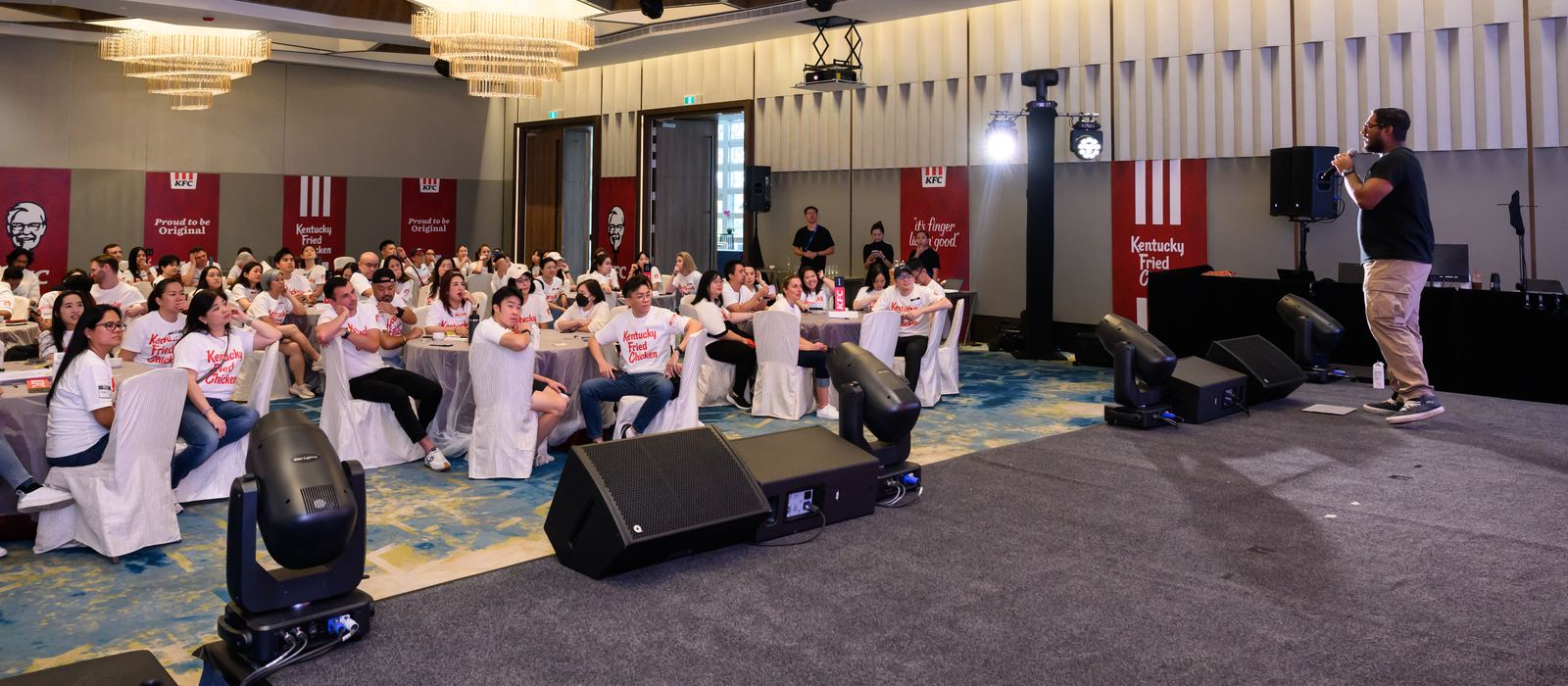
For 300 to 1000 pax, the strongest game format is usually phone-led, low-friction, and tightly hosted. GOSH! keeps teams in clear zones, controls pacing from the stage, and turns missions, submissions, and scoring into a format the room can actually follow.
Large-group logistics
At this size, the format has to solve crowd control and score credibility first. The best large group team building games feel simple to join but tightly planned behind the scenes.
Decide whether teams form by table, zone, department, or preassigned list. For 300 to 1000 pax, cleaner team formation usually matters more than adding extra game complexity.
Keep walking deliberate. Most large-group games work better when the main mechanic can run from seats, standing zones, or nearby checkpoints instead of sending everyone across the venue at once.
Use a mix of auto-scored quiz rounds, timed submissions, moderator-reviewed photo or video tasks, and a clear tie-breaker so the final leaderboard feels credible.
A lead emcee is usually not enough on their own. Larger groups often need floor facilitators, a score or moderation desk, and someone coordinating timing with AV or programme control.
Check QR access, mobile signal, venue Wi-Fi fallback, countdown screens, sound coverage, and whether the room can clearly see score or instruction updates from the stage.
The format should match the schedule. A 20-minute energiser, a 60 to 90 minute main challenge, and a half-day conference flow all need different mission density and facilitation pacing.
Format comparison
For 300 to 1000 pax, choose the format that matches how fixed the seating is and how much movement the venue can absorb without slowing the programme.
| Option | Best for | Strength | Watch out |
|---|---|---|---|
| Table or zone mobile games | Seated ballrooms, plenary rooms, and company events where the group should stay mostly anchored while still competing in teams. | Fast joining, low walking, easy emcee control, and cleaner scoring visibility on the main screen. | Needs reliable screen visibility and clear audio, otherwise instruction repeats can eat into game time. |
| Main-room challenge plus roaming bonus points | Groups that want some movement and discovery without turning the activity into a full route-based hunt. | Balances stage energy with optional side missions, photo tasks, or checkpoint bonuses. | Needs controlled circulation so players do not crowd the same bonus station at the same time. |
| Checkpoint trail for large venues | Conference centres, campuses, or multi-room venues with clear wayfinding and enough space to spread teams out. | Creates more movement and discovery while keeping scoring digital. | Can bottleneck badly if the venue map, checkpoint spacing, or host coverage is weak. |
| Multi-wave department challenge | Very large events where not everyone should play the exact same round at the same time or where the agenda is split across waves. | Lets planners fit the games around speeches, meal service, breakouts, or staggered attendance. | Needs score normalisation and careful rule control so later waves still feel fairly ranked. |
Planner notes
This page should reassure planners of 300 to 1000 pax that the games can stay energetic without losing control of movement, scoring, or stage pacing.
Large group team building games work best when the page explains team zoning, table layout, checkpoint spacing, MC cueing, prize timing, and how the format avoids 500 people rushing one instruction at once.
Spell out the scoring logic: auto-marked rounds where possible, moderated media tasks when needed, visible deadlines, tie-breakers, and a clean leaderboard close that senior stakeholders can trust.
At 300 to 1000 pax, buyers need to know who does what: lead emcee, floor facilitators, score moderation, backstage timing, and venue coordination with AV or programme managers.
Position the page for annual kickoffs, plenary energisers, conference breakouts, hotel ballrooms, and staff appreciation events where low-walking participation is safer than a full outdoor route. For a company-wide update where leadership messaging and inclusive participation must share one agenda, use the all-hands meeting team-building planning guide to map the activity around the plenary flow.
Make it clear that the recommended structure usually includes QR join, team formation by table or zone, a warm-up round, a main mission block, a bonus surge, and a fast final leaderboard reveal.
This URL should connect strongly with large-group, 300 pax, 500 pax, 1000 pax, conference, and low-walking activity pages so it reads as a genuine planning node instead of another generic games page.
Page-specific planning
Use this section as the practical filter before shortlisting large group team building games. It turns the page from a keyword match into a buyer decision guide.
Use this when the team needs a hosted activity that feels specific to the group, not a copied activity list with the keyword changed. The page should answer the buyer's actual situation around large group team building games, not just repeat the activity category. For this page, the planning lens should also cover 300 pax, 500 pax, 1000 pax, table zones, ballroom games, live scoring.
A strong GOSH format should connect missions, team submissions, scoring, facilitation, and the event objective into one clear participant journey.
Avoid overloading the agenda with too many mechanics. Participants should always know what to do next, why it matters, and how their team can win.
Share pax, venue, timing, audience profile, objectives, mobility limits, budget range, and whether the activity should be competitive, collaborative, creative, or message-led.
For Large Group Team Building Games, the first recommendation should state the likely activity shape, facilitation level, movement plan, content customisation, fallback approach, and quote assumptions. That gives the buyer a usable planning direction before a formal proposal is prepared.
Quote-ready planning
GOSH runs through Get Out! Events, so the recommendation can account for facilitation, event flow, venue constraints, group size, and budget before a proposal is prepared.
Next step
Choose the enquiry path that matches where you are in the planning process. GOSH will receive this page context with your brief.
Share pax, timing, venue, and objective for large group team building games. GOSH can recommend the support level and format before you ask for a formal proposal.
Compare hosted mobile missions, workshops, game formats, dinner activities, indoor plans, and outdoor routes.
Send the known details now so the recommendation can account for access, weather, group size, AV, food service, and facilitation.
Formats
Teams stay at tables or assigned zones while completing quizzes, creative prompts, and collaboration missions from their phones.
Departments or seating blocks compete through timed mission waves, bonus rounds, and live leaderboard swings controlled from the stage.
The event starts in one main room, then adds selected checkpoint or roaming tasks only where the venue can handle safe movement.
Sample flow
Why GOSH
GOSH! combines mobile missions, team prompts, live scoring, facilitator support, and AI-assisted planning so the activity can adapt to your event instead of forcing every group through the same fixed format.
Questions
GOSH! is best suited to structured large-group formats from roughly 300 to 1000 pax, provided the venue layout, team zoning, facilitation plan, and connectivity have been scoped properly.
Use a clear scoring mix: auto-marked rounds where possible, timestamp control, moderation rules for media submissions, visible deadlines, and a stated tie-breaker before the game starts.
It depends on venue shape and movement, but larger groups commonly need a lead host, one or more floor or zone facilitators, and someone managing scoring, moderation, or backstage timing.
Yes. That is often the strongest setup for large group team building games because teams can play from tables or seating zones while the host controls pacing from the main stage.
Large group formats should be planned with a connectivity fallback, such as tested mobile data, lightweight mission design, clear QR access points, and AV cues that do not rely on participants constantly refreshing a heavy page.
No. GOSH! is designed around fast QR-based joining so teams can enter the activity quickly on their phones.
Yes. GOSH! can run self-guided, with remote launch support, or with on-site facilitators for hosted team energy, scoring, hints, and debriefs.
Yes. Missions can be adapted around your theme, company values, venue, product, learning points, or retreat agenda.
AI helps speed up brief analysis, mission drafts, quiz ideas, event variations, and post-event summaries. Producers and hosts still shape the final experience.
Plan your experience
Share your pax, venue, timing, and support needs. We will recommend a format that fits the group instead of sending a generic package.